ARTISTIC RECAPTURE OF THE STAINED-GLASS WINDOWS ILLUMINATION
Early stained-glass windows and tinctorial techniques were used in ancient Egypt and Rome. However, only the construction and imagery of the gothic cathedrals allowed to use them in a more artistic way. First of all, straining arches enabled to create perforated volumes of temples and bigger openings. Secondly, the gothic style aimed at showing symbols of divine presence and greatness. And ‘God is light, […]’1. The light effects should impress believers. Moreover, stained-glass windows had an educational purpose. Images of religious scenes helped illiterate believers to become acquainted with the content of the Holy Bible, also known as Biblia Pauperum – ‘Paupers’ Bible’.
Colors
The taints are not random. White is a colour of innocence and purity, it pictures God. Red symbolises martyrdom but also love. Violet represents suffering and passion. Yellow, on the one hand, symbolises betrayal but at the same time power and glory. Blue is a colour of heaven, devotion and Marian cult. Green means revival and immortality. At first, colours were created by adding metal oxides into the molten glass. The material was supposed to represent precious stones (including their price). Nowadays stained-glass windows have special colouring, thanks to that mosaics are more colourful and accurate.
Light Creation
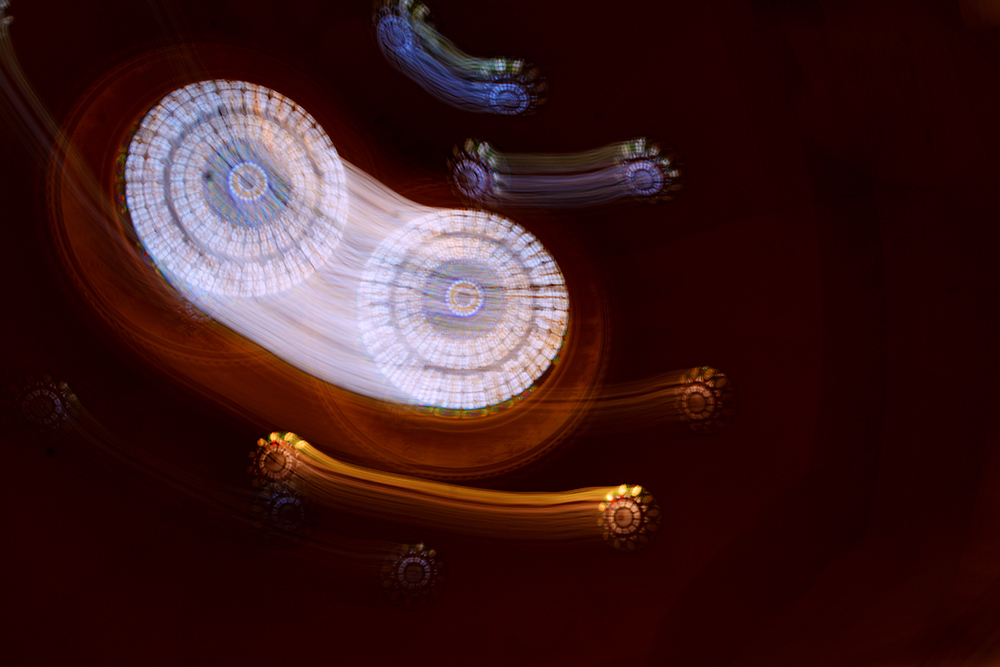
In my imagination, the moment in which the sun brightens the coloured glass creating a glittery mosaic of light was stunning. Every time, when I was visiting churches, I was waiting anxiously for this moment, when the sun would be in the right position, to see the expected illumination. Unfortunately, I have not been enlightened. However, it is not a surprise if we consider the usual position of churches. Mostly a presbytery2 is oriented east – in direction of Jerusalem. Because of that, stunning rosette and large format stained-glass windows placed on the front and back elevation are illuminated just during two brief moments of the day – sunset and sunrise. The biggest amount of light is entering through the windows on the side walls. Since I was not able to see that passing illumination, I tried to recreate the path of the light.
Annotations:
11 John 1:5b 2The main altar, space dedicated for priests and acolytes.
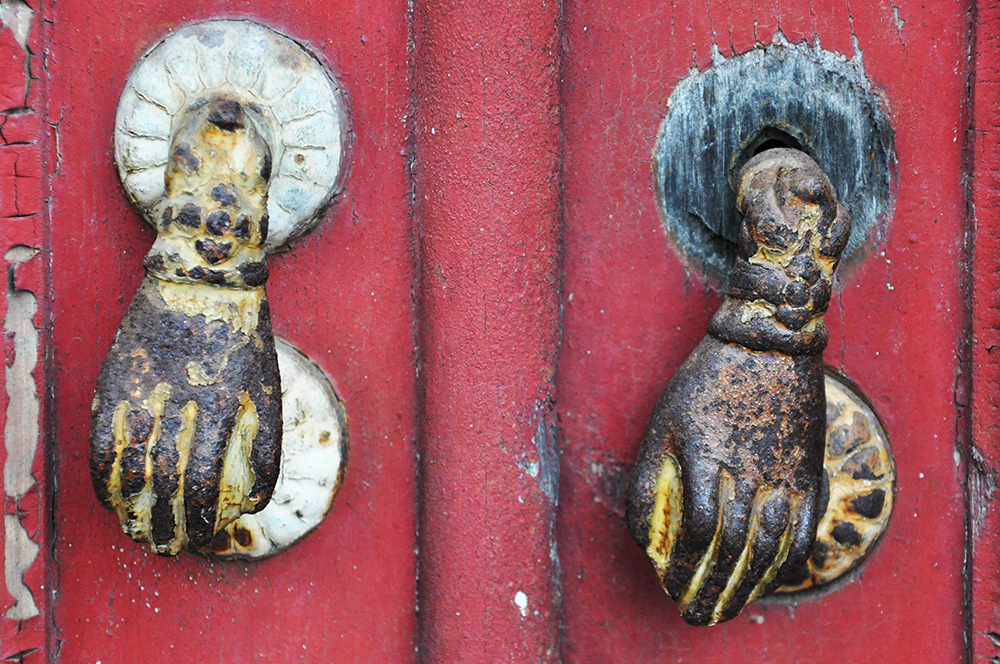
Travelling around Portugal I noticed that many doors have specific detail – hand-shaped door knockers. Firstly, I was thinking that they are just nice, old-fashioned way to welcome the quests. The visitors are able to shake hands even before seeing the host. But after some research, it transpired that this decoration has a deeper meaning and interesting history.
Hamsa
A form of the door knockers refers to Hamsa, known also as Fatima’s Hand. This palm-shaped amulet is present in many different religions, firstly in beliefs of ancient Mesopotamia and Egypt, then in Judaism and Islam. The word Khamsah in Arabic means “five” – number of the fingers in the hand. Hamsa protects against the evil eye, especially families and pregnant women. That is why the symbol appears commonly not only in jewellery, but also it was used as a home decoration. Moreover, it was a sign that showed the faith of the household. According to another theory, door knockers have male and female hands’ shape. Each of them makes a different sound. Islam considers it inappropriate for a woman to open the door to a man. Consequently, a way of rattling allows the host to recognize the gender of the guest, so the right person can welcome the visitor.
Why does this symbol appear in Portugal?
Hand-shaped door knockers are very popular in European countries, which were under Moorish occupation. Similarly, the presence of Judaism on the Iberian Peninsula is very significant. For instance, in Belmonte2 still exists the Jewish community that can be considered truly Portuguese and survived all turbulence of history.
One of my photos was chosen as a cover of the book written by historian Francisco Javier Martínez from the University of Évora in Portugal. The publication “Entangled peripheries. New contributions to the history of Portugal and Morocco.” is dedicated to the memory of Polish orientalist Prof. Eva-Maria von Kemnitz. This lucky coincidence makes me even more proud of my little part in this project.
Annotations:
1pt. mãos – hand 2Small town in Portugal, 75 km from Castelo Branco.







Recent Comments